
That stabbing pain in your heel with the first step out of bed is the classic sign of plantar fasciitis.
The good news: plantar fasciitis recovery time is usually months, not years, and about 80% of people improve within 12 months. The right exercises and a few changes to your routine can help you get there sooner.
Quick Answer
Typical recovery: A few weeks to several months. Around 80% of people improve within a year.
What helps most: Calf and foot stretches, followed by gradual strengthening.
Keep walking? Yes, but cut back on whatever makes your heel pain worse.
Still painful after 3 months? See a physio. Shockwave therapy may help stubborn cases.
Plantar Fasciitis Recovery Time: How Long Does It Take to Heal?
For most people, plantar fasciitis recovery time is a few months once they start the right exercises. Around 80% are better within 12 months.
A smaller group has pain for longer, often because they keep overloading the heel or the diagnosis isn’t quite right.
The plantar fascia is a tough band of tissue running from your heel to your toes. Despite the name, the pain usually comes from irritation and overload rather than ongoing inflammation.
That’s why rest alone rarely fixes it, and gradually loading the foot does.
Why Is My Plantar Fasciitis Recovery Time So Long?
You stand on your plantar fascia every day, so it rarely gets a full break. As a result, your recovery time can stretch out.
Recovery slows down if:
- You’ve suddenly done more, such as starting running, walking further or standing longer at work.
- Your calves and feet are weak or tight, so the fascia takes more strain.
- You go back too fast after a few good days.
- It isn’t plantar fasciitis, for example a nerve problem or a stress fracture in the heel.
4 Plantar Fasciitis Exercises to Start Today
Do these gently once or twice a day. Mild discomfort is fine, but it should settle within 24 hours.
| Exercise | How to Do It | Dose |
|---|---|---|
| Plantar fascia stretch | Sit, cross the sore foot over your knee and pull your toes back towards your shin. | Hold 10–20 seconds, 3 times. Do it before your first steps in the morning. |
| Calf stretch | Face a wall, sore leg behind, heel down and knee straight. Lean in. | Hold 20–30 seconds, 3 times. |
| Seated heel raises | Sit with feet flat. Lift both heels slowly, then lower with control. | 8–12 reps. Move to standing as it gets easier. |
| Towel scrunches | Sit and use your toes to pull a towel towards you. | 1 minute. Stop before your foot cramps. |
Stop and get advice if you have sharp pain, swelling or numbness, or if your heel is worse the next morning.
Should I Rest or Keep Walking?
Keep walking, but find a level your heel can cope with.
If a long walk hurts, try two shorter ones. Supportive shoes help, and so does avoiding long spells barefoot on hard floors.
Runners can swap some runs for cycling or swimming while things settle.
Shop-bought insoles can ease pain for the first few months, but they work best alongside exercises, not instead of them.
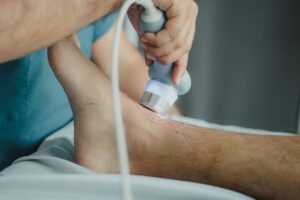
Does Shockwave Therapy Work for Plantar Fasciitis?
It can help some people whose heel pain hasn’t improved after several months of exercises.
Research results are mixed, so it isn’t a first step.
At Releaf, focused shockwave therapy is always used alongside a strengthening plan, never on its own.
Read more in our guide: Shockwave Therapy for Plantar Fasciitis: Does It Really Work?
When Should You See a Physio?
Book an assessment if:
- Your heel is no better after 6–8 weeks of self-help.
- It’s stopping you walking, working or exercising.
- The pain keeps coming back each time you do more.
- You’re not sure it’s plantar fasciitis.
Get urgent medical help for sudden severe heel pain after an injury, a foot that’s hot, red and swollen with a fever, or new numbness or weakness.
How Releaf Physio Treats Plantar Fasciitis in Newcastle
At our Gosforth and Cobalt Business Park clinics, your HCPC-registered physio will:
- Find the cause. We check your foot, ankle, calf strength and walking, and ask about your work, sport and footwear.
- Build your plan. You get a progressive strengthening programme and clear advice on how much activity to do.
- Add extra help if needed. That could be focused shockwave therapy for stubborn pain, or a private scan referral if something doesn’t add up.
- Get you back to running or sport with a gradual return plan.
Plantar Fasciitis FAQs
Can Plantar Fasciitis Go Away on Its Own?
Often, yes, but it can take many months. Stretching and strengthening usually speed things up.
Can I Run With Plantar Fasciitis?
Sometimes. Cut your distance and speed, and stop if it’s worse the next morning.
How Many Shockwave Sessions Will I Need?
It varies. Your physio will recommend a number after assessing your heel.
Will Plantar Fasciitis Come Back?
It can, especially if you increase activity quickly. Keeping your calves and feet strong helps prevent it.
Get Back on Your Feet
Heel pain doesn’t have to rule your mornings, and the right plan can shorten your plantar fasciitis recovery time.
Book a physiotherapy assessment online or call 0191 691 1299 for a free phone consultation with our Newcastle team.
References
- Plantar Fasciitis, American Family Physician (2019)
- NICE IPG311: Shockwave Therapy for Plantar Fasciitis
- Plantar Heel Pain, Berkshire Healthcare NHS

