Recovering from an ACL injury can be frustrating, especially when you’re eager to return to football, rugby or running.
ACL recovery time depends on your injury, treatment and rehabilitation progress. Understanding the recovery stages can help you return to sport safely.
Quick answer
- Recovery: Returning to demanding sports after ACL reconstruction often takes 9–12 months or longer.
- Rehabilitation: Progressive strengthening helps restore knee stability and movement.
- Running: Some people begin running around three months after surgery, depending on their progress.
- Return to sport: Strength, balance and movement control matter more than time alone.
How long does an ACL injury take to recover?
The anterior cruciate ligament (ACL) helps stabilise your knee during twisting, running and changing direction.
ACL injuries commonly occur during football, rugby, skiing and other sports involving sudden movements.
Recovery depends on:
- Injury severity: Partial or complete ACL tear.
- Treatment: Surgery or rehabilitation without surgery.
- Additional injuries: Damage to cartilage, meniscus or other ligaments.
- Strength: Muscle strength and knee stability.
- Sporting goals: Returning to running differs from competitive football.
After ACL reconstruction, returning to demanding sports often takes 9–12 months or longer, according to NHS guidance and ACL rehabilitation research.
However, recovery should be guided by your knee’s function, not just the calendar.
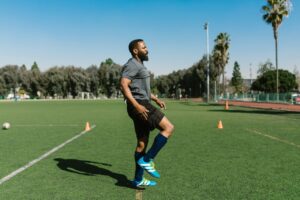
What are the stages of ACL recovery?
ACL rehabilitation typically progresses through four stages.
- Reduce swelling: Restore comfortable knee movement and activate your thigh muscles.
- Build strength: Strengthen your quadriceps, hamstrings and surrounding muscles.
- Return to running: Gradually introduce running once strength and control are sufficient.
- Return to sport: Progress towards jumping, landing, sprinting and changing direction.
Your physiotherapist will adjust each stage based on your progress.
When can you return to running after an ACL injury?
Some people may begin running around 12 weeks after ACL reconstruction. However, this depends on meeting specific rehabilitation criteria.
Before starting, your physiotherapist may assess:
- Knee swelling and range of movement.
- Quadriceps and hamstring strength.
- Single-leg balance and control.
- Your ability to tolerate strengthening exercises.
The Aspetar ACL rehabilitation guideline recommends using clinical criteria rather than time alone when deciding whether to return to running.
At Releaf, our AlterG anti-gravity treadmill may help suitable patients return to running with reduced body-weight loading.
However, reduced-load running doesn’t automatically mean you’re ready for unrestricted outdoor running.
How do you know when you’re ready to return to sport?
Feeling pain-free doesn’t necessarily mean your knee is ready for competitive sport.
Your physiotherapist should assess strength, balance, movement quality and confidence.
Biodex strength testing measures muscle strength and compares your injured leg with your uninjured leg.
This can identify remaining weaknesses and help guide rehabilitation.
At Releaf, we offer Biodex strength and limb-symmetry testing to support return-to-sport decisions.
However, no single test guarantees that you’re ready to return safely.
When should you see a physio?
Consider booking an assessment if:
- Your knee feels unstable or gives way.
- Swelling or stiffness continues.
- You’re struggling to rebuild strength.
- You’re unsure when to start running.
- You want objective testing before returning to sport.
Seek urgent medical help if you experience severe swelling, knee deformity, inability to bear weight or a hot, swollen knee with fever.
Following surgery, seek urgent advice for new calf pain and swelling. Call 999 for sudden chest pain or breathlessness.
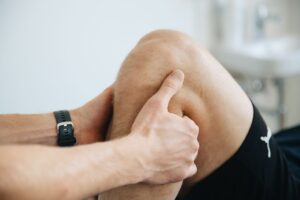
How Releaf Physio treats ACL injuries in Newcastle
Our HCPC-registered physiotherapists provide ACL rehabilitation at Gosforth and Cobalt Business Park, Newcastle upon Tyne.
- Assess your knee: Check movement, strength, stability and rehabilitation progress.
- Build your plan: Create a personalised sports injury rehabilitation programme.
- Measure progress: Use Biodex strength testing or AlterG treadmill rehabilitation when appropriate.
- Return to sport: Gradually rebuild strength, confidence and sport-specific movements.
Our goal is to help you return to the activities you enjoy, not simply reduce pain.
ACL recovery FAQs
Can an ACL injury heal without surgery?
Some ACL injuries can be managed without surgery. However, treatment depends on knee stability, injury severity and sporting goals.
Can I play football six months after ACL surgery?
Six months is generally too early for unrestricted competitive football after ACL reconstruction. The Aspetar ACL rehabilitation guideline recommends meeting strength and functional criteria before returning to demanding sports.
Why does my knee still feel weak after ACL surgery?
Muscle weakness can remain even after pain and swelling improve. Progressive strengthening helps restore muscle function.
Can Biodex testing tell me if I’m ready for sport?
Biodex testing measures muscle strength and differences between your legs. However, movement control and sport-specific performance also matter.
Get back to doing what you love
ACL recovery takes time, but structured rehabilitation can help you rebuild strength, stability and confidence.
At Releaf Physio, we combine personalised rehabilitation with objective strength testing to support your return to sport.
Book online with Releaf Physio or call 0191 691 1299 for a free phone consultation.
References
- NHS – Recovering from ACL Surgery – NHS guidance on recovery times, rehabilitation and returning to sport following ACL surgery.
- Aspetar Clinical Practice Guideline on Rehabilitation After ACL Reconstruction (2023) – Published in the British Journal of Sports Medicine. Evidence-based recommendations for rehabilitation, strength testing, returning to running and returning to sport.

