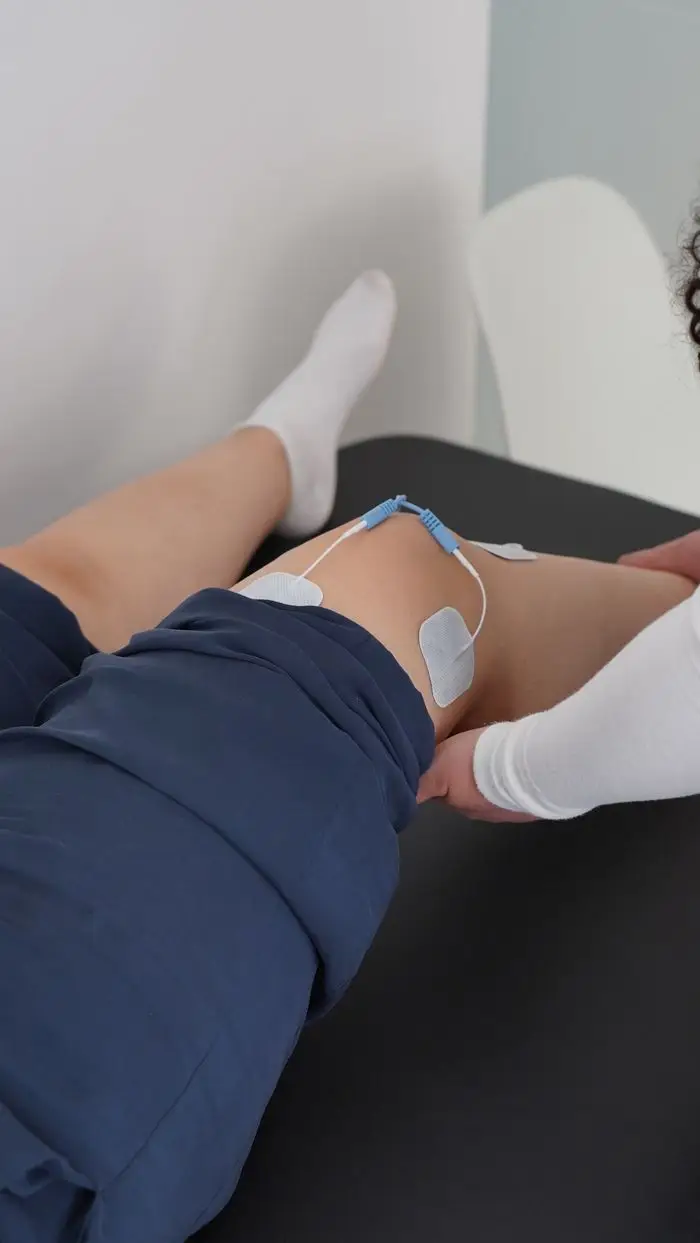
Electrical muscle stimulation (EMS) is a physiotherapy technique that uses controlled electrical impulses to stimulate muscles and produce a contraction.
It can be used as part of rehabilitation when someone has reduced muscle strength, difficulty activating a muscle, or needs additional support during their recovery. EMS may be used alongside exercise and other physiotherapy treatments rather than as a replacement for active rehabilitation.
The technique has been used in different areas of rehabilitation, including recovery following injury, surgery, or periods of reduced activity.
In this article, we’ll explain what electrical muscle stimulation is, how EMS works, how it can be used in physiotherapy, what a treatment session involves, and when EMS may be appropriate.
Key Takeaways
- Electrical muscle stimulation (EMS) uses controlled electrical impulses to stimulate muscle contractions.
- EMS may be used to support muscle activation and strengthening during rehabilitation.
- It can be particularly useful when a muscle is difficult to activate following injury, surgery, or reduced activity.
- EMS is generally used alongside active exercise rather than instead of exercise.
- The intensity and settings can be adjusted according to the individual and treatment goal.
- EMS should be delivered appropriately and with consideration of relevant medical conditions and contraindications.
- You may feel a tingling sensation and muscle contraction during treatment.
- A physiotherapist can assess whether EMS is appropriate for your specific rehabilitation needs.
What Is Electrical Muscle Stimulation?
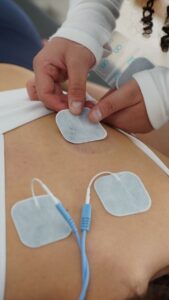
Electrical muscle stimulation, commonly known as EMS, involves applying small electrical impulses through electrodes placed on the skin.
These impulses stimulate the nerves supplying a muscle, which can cause the muscle to contract.
During normal movement, your brain sends signals through your nervous system to activate your muscles.
EMS provides an external electrical stimulus that can assist with producing a muscle contraction.
The electrical stimulation can be adjusted depending on the purpose of treatment, including factors such as:
- Intensity
- Frequency
- Pulse duration
- Treatment duration
- Electrode placement
A physiotherapist will select appropriate settings based on your individual circumstances and treatment goals.
How Does EMS Work?
EMS electrodes are usually placed over or near the muscles that need to be stimulated.
When the device is switched on, controlled electrical impulses are delivered through the electrodes.
You may initially feel:
- Tingling
- Pulsing
- A tapping sensation
- Muscle twitching
- A gradual muscle contraction
As the intensity increases, the contraction usually becomes more noticeable.
The aim is to produce a useful muscle contraction while keeping the treatment as comfortable as possible.
Your physiotherapist will monitor your response and adjust the settings where appropriate.
What Is EMS Used for in Physiotherapy?
EMS can have several potential applications within physiotherapy rehabilitation.
One of the most common reasons for using EMS is to assist with muscle activation when someone is struggling to voluntarily contract a muscle effectively.
This can happen following:
- Surgery
- Significant injury
- Prolonged periods of reduced activity
- Immobilisation
- Joint pain or swelling
- Neurological conditions
EMS may also be incorporated into a strengthening programme when additional stimulation is considered appropriate.
EMS After Surgery
Muscle weakness is common following certain surgical procedures.
For example, after knee surgery, the quadriceps muscles can become weaker and more difficult to activate.
This can affect:
- Walking
- Stairs
- Squatting
- Getting up from a chair
- Balance
- Overall lower-limb function
In some rehabilitation programmes, EMS may be used alongside active quadriceps exercises to help encourage muscle activation.
The specific approach depends on the type of surgery, stage of recovery, and advice from your healthcare team.
EMS for Muscle Activation
Sometimes the main challenge during rehabilitation isn’t simply a lack of muscle strength.
You may find that you’re unable to properly activate a particular muscle following an injury or period of inactivity.
EMS can provide an external stimulus that produces a muscle contraction.
This may help you become more aware of the muscle and practise activating it as part of your rehabilitation programme.
Your physiotherapist may combine EMS with active exercise so that you’re working on both the electrical stimulation and voluntary control of the muscle.
EMS for Muscle Strengthening
EMS can also be used as part of a strengthening programme.
When an electrical impulse produces a muscle contraction, the muscle is exposed to a form of resistance or workload.
However, EMS shouldn’t generally be viewed as a substitute for normal strength training.
Exercises that require you to actively control and load your body remain an important part of most rehabilitation programmes.
EMS can instead be used as an additional tool when your physiotherapist believes it may provide a useful benefit.
EMS and Physiotherapy Exercise
One of the ways EMS can be incorporated into physiotherapy is alongside active exercise.
For example, a physiotherapist may apply EMS to a muscle while you perform an appropriate exercise.
This can allow you to combine:
- Electrical stimulation
- Voluntary muscle contraction
- Functional movement
- Progressive strengthening
The exact approach will depend on the muscle being targeted and your rehabilitation goals.
What Does an EMS Physiotherapy Session Feel Like?
Everyone experiences electrical stimulation slightly differently.
When the treatment begins, you may notice a mild tingling sensation.
As the intensity is increased, you may feel the muscle beginning to contract.
The sensation can feel unusual initially, but it shouldn’t normally be excessively painful.
Your physiotherapist will adjust the intensity and settings according to your response.
It’s important to tell your physiotherapist if the stimulation becomes uncomfortable or painful.
What Happens During an EMS Treatment?
Your physiotherapist will first assess your symptoms, movement, strength, and rehabilitation needs.
If EMS is considered appropriate, they will explain the treatment and position the electrodes over the relevant muscle.
The device will then be switched on and the intensity gradually adjusted.
During the session, you may be asked to:
- Relax while the muscle is stimulated
- Actively contract the muscle
- Perform a specific exercise
- Complete a functional movement
The electrodes are then removed once the treatment is complete.
Your physiotherapist may reassess your muscle activation or movement following treatment.
How Long Does an EMS Session Take?
The length of an EMS treatment can vary depending on the individual and the purpose of the stimulation.
EMS may form only one part of a physiotherapy appointment alongside:
- Assessment
- Exercise
- Strength training
- Mobility work
- Manual therapy where appropriate
- Functional rehabilitation
- Education and advice
The overall treatment plan should focus on your rehabilitation goals rather than relying on electrical stimulation alone.
Is EMS Painful?
EMS can feel unusual, particularly if you’ve never experienced electrical stimulation before.
You may notice tingling or a strong muscle contraction as the intensity increases.
The treatment should be adjusted to an appropriate level for you.
If the stimulation is painful or causes significant discomfort, tell your physiotherapist so that they can adjust or stop the treatment.
Is EMS Safe?
When appropriately applied and used with suitable patients, EMS can be a useful physiotherapy treatment.
However, it isn’t appropriate for everyone.
Your physiotherapist should consider your medical history, current symptoms, medications, and any relevant medical devices or conditions before using electrical stimulation.
If you’re unsure whether EMS is suitable for you, discuss it with your physiotherapist or healthcare professional.
Who Might Benefit From EMS?
EMS may be considered for people experiencing difficulties with muscle activation or strength as part of rehabilitation.
This may include people recovering from:
- Knee surgery
- Other orthopaedic procedures
- Significant muscle weakness
- Joint injuries
- Periods of immobilisation
- Reduced physical activity
- Certain neurological conditions
Whether EMS is appropriate depends on the individual.
A physiotherapy assessment can help determine whether it could form a useful part of your treatment programme.
EMS for Knee Rehabilitation
EMS is sometimes used during knee rehabilitation, particularly when there is difficulty activating the quadriceps.
Quadriceps weakness can occur following knee injury or surgery.
A rehabilitation programme may combine EMS with exercises such as:
- Quadriceps contractions
- Straight-leg raises
- Squats
- Step-ups
- Leg presses
- Single-leg exercises
As strength improves, your physiotherapist can progressively increase the demands placed on the muscle.
EMS for Sports Rehabilitation
Athletes may sometimes use EMS as part of rehabilitation following injury or surgery.
The goal is usually to complement a broader programme rather than replace normal training.
Depending on the injury, rehabilitation may eventually include:
- Strength training
- Running
- Jumping
- Balance exercises
- Agility
- Changes of direction
- Sport-specific drills
EMS may be used at an appropriate stage if your physiotherapist believes it can support your rehabilitation.
Can EMS Replace Exercise?
No.
Active exercise is usually an important component of physiotherapy rehabilitation.
Exercise allows you to develop strength, coordination, balance, movement control, and the ability to tolerate real-life activities.
EMS can be used as an additional treatment tool in certain circumstances, but it shouldn’t automatically replace active rehabilitation.
Your physiotherapist can determine whether combining EMS with exercise could be useful for your particular situation.
EMS vs TENS: What’s the Difference?
EMS and TENS are both forms of electrical stimulation, but they are generally used for different purposes.
EMS is designed to stimulate nerves supplying muscles and produce muscle contractions.
TENS, or transcutaneous electrical nerve stimulation, is generally used to provide electrical stimulation with the aim of influencing pain perception.
The sensations and treatment settings can therefore be different.
If you’re unsure which type of electrical stimulation you’re receiving, your physiotherapist can explain how the treatment is being used and why it has been selected.
Can EMS Help With Chronic Pain?
EMS is primarily focused on stimulating muscle activity rather than directly treating the underlying cause of chronic pain.
For some people, improving muscle strength and physical capacity can form part of a broader approach to managing persistent pain.
However, chronic pain is complex and treatment should be based on an individual assessment.
Your physiotherapist can help determine whether strengthening, movement rehabilitation, education, or other approaches are appropriate for you.
What Are the Benefits of EMS?
When appropriately used, EMS may provide several potential benefits within rehabilitation.
These can include:
- Supporting muscle activation
- Helping address muscle weakness
- Providing an additional strengthening stimulus
- Supporting rehabilitation following surgery
- Helping patients who struggle to activate certain muscles
- Complementing active exercise
- Providing a structured way to target specific muscles
The potential benefits depend on the individual and how EMS is incorporated into the wider rehabilitation programme.
What Are the Limitations of EMS?
EMS isn’t a solution for every type of injury or condition.
It doesn’t replace the need for appropriate exercise, movement, education, and progressive rehabilitation.
There may also be situations where EMS isn’t appropriate.
Your physiotherapist will consider whether the potential benefits outweigh any risks and whether another treatment approach would be more suitable.
Who Shouldn’t Use EMS?
Electrical stimulation isn’t suitable for everyone.
Your physiotherapist will need to consider your individual medical history before treatment.
EMS may be unsuitable or require additional medical advice in certain circumstances, including some people with:
- Implanted electrical devices
- Certain heart conditions
- Some neurological conditions
- Reduced sensation in the treatment area
- Certain skin conditions
- Areas of damaged or irritated skin
This is not a complete list.
Always tell your physiotherapist about relevant medical conditions, implanted devices, medications, pregnancy, or changes in your health before treatment.
Warning Signs During Treatment
EMS should not cause severe pain or significant adverse symptoms.
Tell your physiotherapist immediately if you experience:
- Significant pain
- Burning or excessive skin irritation
- Unexpected muscle spasms
- Dizziness
- Feeling unwell
- Unusual symptoms during treatment
Your physiotherapist can stop or adjust the treatment and determine whether further assessment is required.
When Should You See a Physiotherapist?
You don’t need to wait until your muscle weakness becomes severe before seeking physiotherapy.
An assessment may be useful if you are:
- Recovering from surgery
- Struggling to regain muscle strength
- Finding it difficult to activate a muscle
- Returning to exercise following an injury
- Experiencing persistent weakness
- Recovering from a period of immobilisation
- Unsure how to structure your rehabilitation
- Struggling to progress with exercise alone
A physiotherapist can assess your movement, strength, function, and rehabilitation goals and determine whether EMS or other treatment options may be appropriate.
Why Releaf’s Physiotherapy Approach Can Help
At Releaf, we understand that rehabilitation is rarely about one treatment technique.
Our physiotherapists assess your individual symptoms, physical capacity, lifestyle, and goals before developing a treatment programme.
Depending on your needs, treatment may include:
- Physiotherapy assessment
- Electrical muscle stimulation where appropriate
- Strength and conditioning
- Exercise rehabilitation
- Mobility exercises
- Manual therapy where appropriate
- Functional rehabilitation
- Return-to-sport planning
- Training load guidance
- Injury prevention strategies
If EMS is appropriate for you, it can be incorporated into a wider rehabilitation programme designed around your specific needs.
Rather than relying on a single treatment, our aim is to help you build the strength, movement, and confidence needed to return to the activities that matter to you.
Why Choose Releaf Physio?
Whether you’re recovering from surgery, dealing with muscle weakness, or returning to activity following an injury, our experienced physiotherapists provide personalised, evidence-informed care.
We can help you:
- Understand the cause of your symptoms
- Identify areas of weakness
- Improve muscle activation
- Build strength
- Restore movement and function
- Progress your rehabilitation
- Return to exercise and sport
- Reduce the risk of recurring problems
- Build confidence in your recovery
Your treatment programme should be based on your individual needs rather than simply using the latest treatment technique.
Frequently Asked Questions
What is electrical muscle stimulation?
Electrical muscle stimulation, or EMS, uses controlled electrical impulses delivered through electrodes placed on the skin to stimulate nerves and produce muscle contractions.
It can be used as part of physiotherapy rehabilitation to support muscle activation and strengthening.
Does EMS build muscle?
EMS can produce muscle contractions and may be used as part of a strengthening programme.
However, active strength training remains an important part of rehabilitation. EMS is generally best considered as an additional tool rather than a replacement for exercise.
Is EMS painful?
EMS can feel unusual and may cause tingling or noticeable muscle contractions.
It shouldn’t normally be excessively painful. Tell your physiotherapist if the stimulation becomes uncomfortable so that the settings can be adjusted.
How long does EMS treatment take?
The duration varies depending on the individual and the reason for treatment.
EMS may form part of a longer physiotherapy appointment alongside assessment, exercise, and other rehabilitation techniques.
Can EMS help after knee surgery?
EMS may be useful in some rehabilitation programmes following knee surgery, particularly when there is difficulty activating the quadriceps.
Your physiotherapist will determine whether it is appropriate based on your surgery, symptoms, and stage of recovery.
Can I use EMS at home?
Some EMS devices are designed for home use, but this doesn’t mean they are appropriate for everyone.
It’s important to understand how the device should be used and whether electrical stimulation is suitable for your health and rehabilitation needs.
Speak to a physiotherapist or appropriate healthcare professional before using EMS if you’re unsure.
Is EMS the same as TENS?
No. EMS is primarily designed to stimulate muscles and produce muscle contractions, whereas TENS is generally used as an electrical stimulation technique for managing pain.
Your physiotherapist can explain which treatment is being used and why.
Can EMS replace physiotherapy exercises?
No. EMS can complement an exercise programme but doesn’t replace the benefits of active movement and progressive strengthening.
A complete rehabilitation programme should address your individual functional goals.
Who shouldn’t have EMS?
EMS isn’t appropriate for everyone.
Your physiotherapist will consider your medical history, implanted devices, sensation, skin condition, and other relevant factors before treatment.
How often should EMS be used?
There isn’t one schedule that is appropriate for everyone.
The frequency and duration depend on the muscle being targeted, your rehabilitation stage, the treatment goal, and your overall programme.
Your physiotherapist can recommend an appropriate approach.
Does EMS work for everyone?
No treatment works in exactly the same way for everyone.
EMS may be particularly useful when a person is struggling with muscle activation or weakness, but its suitability depends on the individual.
A physiotherapy assessment can help determine whether it is appropriate for you.
Conclusion
Electrical muscle stimulation can be a useful tool within physiotherapy rehabilitation when it is appropriately selected and applied.
By using controlled electrical impulses to stimulate muscle contractions, EMS may help support muscle activation and strengthening, particularly following injury, surgery, or periods of reduced activity.
However, EMS isn’t a replacement for active rehabilitation. Exercise, progressive loading, movement, and functional training remain important components of most recovery programmes.
If you’re struggling with muscle weakness, finding it difficult to activate a muscle, or looking for support following surgery or injury, a physiotherapy assessment can help determine whether EMS could form part of your rehabilitation.
At Releaf, our goal is to provide treatment based on your individual needs and help you build the strength, movement, and confidence needed to return to the activities you enjoy.