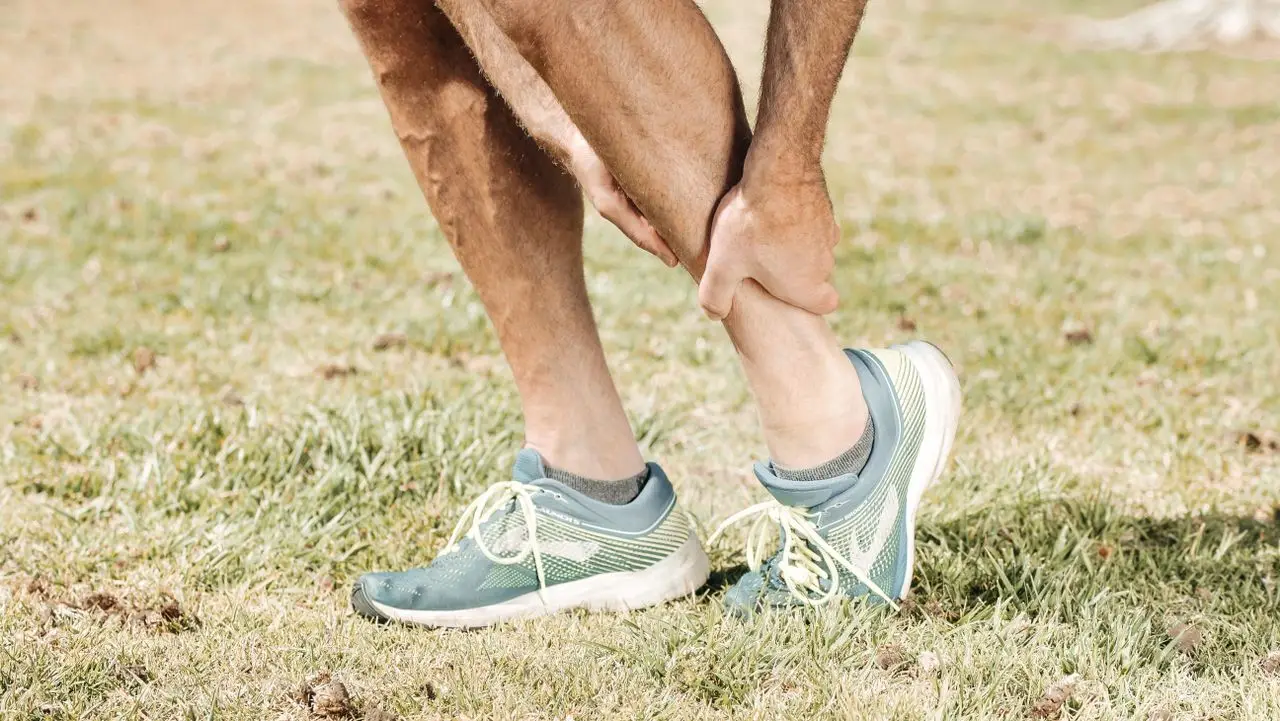
Achilles tendon pain can make everyday activities such as walking, climbing stairs, running, jumping, or playing sport uncomfortable. The pain may develop gradually over time or appear after an increase in physical activity, particularly when the demands placed on the tendon change too quickly.
Achilles tendinopathy is a common cause of pain around the Achilles tendon, which connects the calf muscles to the heel bone. Although symptoms can sometimes improve with time, persistent pain can affect your ability to exercise, stay active, and carry out everyday tasks.
Understanding what may be contributing to your symptoms, which rehabilitation exercises may help, and how to manage your activity levels can make an important difference to your recovery.
In this article, we’ll explore Achilles tendinopathy, common symptoms, potential causes, physiotherapy treatment options, rehabilitation exercises, recovery timelines, and when you should consider seeing a physiotherapist.
Key Takeaways
- Achilles tendinopathy commonly causes pain, stiffness, and reduced tolerance to activity around the Achilles tendon.
- Symptoms often develop following changes in running, walking, jumping, or other physical activities.
- Achilles tendinopathy can affect the middle portion of the tendon or the area where it attaches to the heel bone.
- Progressive calf-strengthening exercises are often an important part of rehabilitation.
- Complete rest isn’t usually necessary, but activities that significantly aggravate symptoms may need to be modified.
- Recovery can take several weeks to several months, and persistent symptoms may require a longer rehabilitation programme.
- Returning to running or sport too quickly can aggravate symptoms.
- A physiotherapist can develop an individualised rehabilitation programme based on your symptoms, activity levels, and goals.
- Sudden severe Achilles pain or a popping sensation followed by difficulty pushing off the foot requires urgent medical assessment.
What Is Achilles Tendinopathy?
Achilles tendinopathy is a condition involving pain and reduced load tolerance in the Achilles tendon.
The Achilles tendon is the strong band of tissue that connects the calf muscles, including the gastrocnemius and soleus, to the heel bone.
It plays an important role in activities such as walking, running, jumping, climbing stairs, and pushing off the ground.
When you walk or run, the Achilles tendon helps transfer force from your calf muscles to your foot. It also stores and releases energy during movement, making it particularly important for activities involving repeated loading.
Achilles tendinopathy can develop when the demands placed on the tendon exceed its current capacity to tolerate those demands.
This may happen following a sudden increase in running distance, more frequent training sessions, additional hill work, or a return to exercise after a period of inactivity.
The term tendinopathy describes a problem involving the tendon and its ability to tolerate load. It doesn’t necessarily mean that the tendon is torn or that the tissue has been permanently damaged.
Symptoms and recovery times can vary considerably between individuals, which is why an individual assessment can be useful when pain persists.
What Are the Common Symptoms of Achilles Tendinopathy?
Achilles tendinopathy can cause several symptoms, depending on the location of the problem and how irritable the tendon has become.
Common symptoms may include:
- Pain around the Achilles tendon
- Stiffness when getting out of bed in the morning
- Discomfort during the first few steps after sitting for a long time
- Pain when walking uphill or climbing stairs
- Discomfort during running or jumping
- Tenderness when pressing the tendon
- Stiffness after exercise
- Swelling or thickening around the tendon
- Reduced calf strength
- Difficulty performing repeated heel raises
- Pain that increases when activity levels rise
Some people notice that their symptoms improve once they have warmed up, only for the pain or stiffness to return later.
Others experience discomfort throughout an activity, particularly when the tendon is exposed to more loading than it can currently tolerate.
If Achilles pain is affecting your walking, exercise, work, or everyday activities, it may be worth having the problem assessed.
What Causes Achilles Tendinopathy?
There isn’t always one single cause of Achilles tendinopathy.
The condition often develops when the amount or intensity of loading placed on the tendon changes faster than it can adapt.
For example, someone may develop symptoms after suddenly increasing their running distance or introducing more intense training sessions.
Potential contributing factors include:
- Increasing running distance too quickly
- Increasing running speed or intensity
- Introducing hill running or sprint training
- Increasing jumping or plyometric exercises
- Returning to sport after a period of inactivity
- Increasing the frequency of training sessions
- Sudden changes in walking or hiking activity
- Reduced calf strength or physical conditioning
- Previous Achilles tendon problems
- Inadequate recovery between demanding activities
Achilles tendinopathy can also develop in people who don’t participate in sport.
Jobs involving prolonged walking, standing, or repeated stair climbing may place considerable demands on the tendon, particularly when activity levels change.
Other factors, including age, certain medical conditions, and some medications, may also influence tendon health.
However, symptoms can develop even when someone has a relatively consistent exercise routine.
The aim of an assessment is to understand the combination of factors that may be contributing to your symptoms rather than assuming there is one specific cause.
What Are the Different Types of Achilles Tendinopathy?
Achilles tendinopathy is generally described according to the location of the symptoms.
Understanding the difference can be useful because the most appropriate exercises and starting positions may vary.
Midportion Achilles Tendinopathy
Midportion Achilles tendinopathy affects the section of the tendon above the heel bone, commonly several centimetres above its attachment.
Symptoms may include:
- Pain in the middle portion of the Achilles tendon
- Tenderness when pressing the tendon
- Stiffness during the first few steps in the morning
- Discomfort during running or jumping
- Pain during calf-strengthening exercises
- Localised thickening or swelling
Symptoms may become more noticeable following running, repeated heel raises, or other activities that place repeated demands on the calf muscles and Achilles tendon.
Insertional Achilles Tendinopathy
Insertional Achilles tendinopathy affects the area where the Achilles tendon attaches to the heel bone.
Symptoms may include:
- Pain at the back of the heel
- Tenderness around the tendon attachment
- Discomfort when wearing certain shoes
- Pain during uphill walking or running
- Stiffness after periods of rest
- Pain when performing heel raises, particularly from a step
The main difference is the location of the pain.
Insertional Achilles tendinopathy can be aggravated by compression of the tendon against the heel bone. As a result, exercises that involve lowering the heel well below the level of a step may be uncomfortable and may need to be avoided during the early stages of rehabilitation.
A physiotherapist can help determine which approach is appropriate for your symptoms.
How Is Achilles Tendinopathy Diagnosed?
A physiotherapist will usually begin by taking a detailed history of your symptoms.
This may include asking about:
- When your Achilles pain started
- Whether symptoms developed gradually or suddenly
- Your current walking, running, or exercise routine
- Recent changes in training volume or intensity
- Whether your pain is worse in the morning
- Which activities aggravate your symptoms
- Previous Achilles or calf injuries
- Any recent changes in medication or general health
They may then assess your walking, ankle movement, calf strength, balance, and ability to perform activities such as heel raises.
The location of your pain and your response to specific movements can help distinguish Achilles tendinopathy from other causes of heel or ankle pain.
In many cases, the diagnosis can be made through a clinical assessment. Ultrasound or MRI imaging isn’t routinely necessary for everyone, but further investigation may be appropriate if the diagnosis is uncertain or another injury is suspected.
A sudden onset of severe Achilles pain should be assessed promptly, particularly if you felt a pop or are unable to push off the foot normally.
Physiotherapy Treatment for Achilles Tendinopathy
Physiotherapy treatment depends on the location of your pain, the severity of your symptoms, your current physical capacity, and your goals.
There isn’t one exercise or treatment that is suitable for everyone.
Your physiotherapist may recommend a combination of:
- Progressive calf-strengthening exercises
- Tendon-loading rehabilitation
- Activity modification
- Running and training advice
- Balance and movement exercises
- Ankle and calf mobility work where appropriate
- Education and self-management advice
- Gradual return-to-running programmes
- Sport-specific rehabilitation
- Load management
The main aim is to help the Achilles tendon tolerate increasing levels of activity while improving calf strength and overall function.
Exercise-based rehabilitation is often a central part of treatment, although the starting exercises and progression will depend on your symptoms.
Achilles Tendinopathy Rehab Exercises
Rehabilitation exercises are designed to improve the strength and load tolerance of the calf muscles and Achilles tendon.
The most appropriate exercises will depend on your current symptoms, the location of your tendon pain, and your ability to tolerate loading.
You don’t necessarily need to start with difficult exercises. In many cases, beginning with manageable resistance and progressing gradually is more appropriate.
1. Isometric Calf Raises
Isometric exercises involve contracting a muscle without significant movement at the joint.
They can sometimes be useful during the earlier stages of rehabilitation when repeated movement is uncomfortable.
To perform a basic isometric calf exercise:
- Stand near a wall or stable surface for support.
- Rise onto the balls of your feet, if comfortable.
- Hold the raised position while keeping your weight evenly distributed.
- Maintain the position for a short period before lowering your heels.
- Repeat according to your current ability.
If standing calf raises are too painful, a physiotherapist may suggest a seated or otherwise modified version.
The aim is to introduce controlled loading without significantly aggravating your symptoms.
2. Double-Leg Heel Raises
Double-leg heel raises are a common starting point for calf and Achilles rehabilitation.
They strengthen the calf muscles while allowing both legs to share the load.
To perform the exercise:
- Stand with your feet approximately hip-width apart.
- Hold a stable surface for balance if necessary.
- Slowly raise both heels from the floor.
- Pause briefly at the top.
- Lower your heels in a controlled manner.
Start with a comfortable range of movement and a manageable number of repetitions.
As your strength improves, your physiotherapist may gradually increase the repetitions, resistance, or time spent under tension.
If you have insertional Achilles tendinopathy, begin on level ground rather than lowering your heels below the level of a step.
3. Single-Leg Heel Raises
Single-leg heel raises place more demand on the calf muscles and Achilles tendon than double-leg variations.
They may be introduced when you can tolerate the easier exercises and have sufficient strength and balance.
To perform the exercise:
- Stand on one leg while holding a stable surface if needed.
- Slowly raise your heel as high as you can comfortably manage.
- Pause briefly at the top.
- Lower your heel in a controlled manner.
- Repeat according to your rehabilitation plan before switching legs.
You may initially find that the height of your heel raise is lower on the affected side.
This can improve as your strength and tolerance develop.
Single-leg heel raises aren’t suitable for everyone at the beginning of rehabilitation, so your physiotherapist can help determine when to introduce them.
4. Seated Calf Raises
Seated calf raises can help strengthen the soleus muscle, which contributes to ankle movement and Achilles tendon loading.
They can be useful when standing exercises are too demanding or when a rehabilitation programme needs to target calf strength in a different position.
To perform the exercise:
- Sit on a stable chair with your feet flat on the floor.
- Keep the balls of your feet in contact with the ground.
- Slowly raise your heels while keeping your toes down.
- Pause briefly at the top.
- Lower your heels in a controlled manner.
As your strength improves, additional resistance may be introduced using a suitable weight placed securely across the thighs.
The resistance and number of repetitions should reflect your current ability.
5. Progressive Calf Strengthening
As your symptoms improve, rehabilitation can progress towards more demanding exercises.
Depending on your goals, this may include:
- Heel raises with additional resistance
- Heavier seated calf raises
- Single-leg strengthening
- Controlled step exercises
- Faster calf contractions
- Hopping and jumping drills
- Running-specific exercises
These progressions help prepare the calf muscles and Achilles tendon for the higher forces involved in running, jumping, and sport.
However, progressing too quickly can aggravate symptoms.
Your physiotherapist can help determine when to increase resistance, introduce faster movements, or return to impact-based exercise.
How Often Should You Do Achilles Tendinopathy Exercises?
The appropriate frequency depends on the exercises, their intensity, and how your tendon responds to loading.
Some rehabilitation programmes involve strengthening several times per week, with recovery periods between demanding sessions.
However, the best schedule will depend on your individual circumstances.
It’s important to monitor how your symptoms respond during exercise and over the following 24 hours.
If pain or stiffness becomes substantially worse or remains elevated after a session, your programme may need to be adjusted.
A physiotherapist can help you determine the appropriate balance between loading the tendon and allowing sufficient recovery.
Should You Stop Running If You Have Achilles Tendinopathy?
Not necessarily.
Complete rest isn’t always required when managing Achilles tendinopathy, but continuing to run at your usual intensity may not be appropriate if it significantly aggravates your symptoms.
The aim is to manage your overall activity levels while gradually improving the capacity of the tendon.
Depending on your symptoms, you may need to:
- Temporarily reduce your running distance
- Reduce running speed or intensity
- Avoid hills or sprint sessions
- Increase recovery time between runs
- Temporarily replace some running sessions with lower-impact exercise
- Reduce jumping or other high-impact activities
- Gradually rebuild your previous training volume
For some people, a temporary reduction in running is sufficient. Others may need to pause running until walking and basic strengthening exercises become more comfortable.
A physiotherapist can help you decide what is appropriate based on your symptoms, current strength, and running goals.

How Long Does Achilles Tendinopathy Take to Recover?
Recovery time varies considerably between individuals.
Some people begin to notice improvements within several weeks of making appropriate changes to their activity and starting rehabilitation.
However, a full return to running, jumping, or competitive sport may take several months, particularly if symptoms have been present for a long time.
Persistent Achilles tendinopathy can take longer to improve, and recovery doesn’t always follow a straight line.
Factors that may influence recovery include:
- How long you’ve had symptoms
- The severity and irritability of your pain
- Whether the problem affects the middle or insertional portion of the tendon
- Your current calf strength
- Your daily walking and activity levels
- The demands of your sport or job
- Previous Achilles injuries
- How much you can modify aggravating activities
- Your response to progressive rehabilitation
What Does Recovery Usually Look Like?
Although everyone progresses differently, rehabilitation can be thought of in several broad stages.
Early stage: Managing symptoms
The initial focus is often on reducing aggravating loads, maintaining appropriate daily activity, and introducing exercises that the tendon can tolerate.
Walking and basic calf exercises may need to be modified depending on pain and function.
Middle stage: Building strength
As symptoms become more manageable, the programme can progress towards more demanding calf-strengthening exercises.
The aim is to improve strength and increase the amount of load the tendon can tolerate.
Later stage: Returning to running and sport
Once sufficient strength and functional capacity have been developed, rehabilitation may progress towards hopping, jumping, running, and sport-specific activities.
These movements place greater demands on the Achilles tendon, so they should be introduced gradually.
Progression should be based on your symptoms, strength, and ability to tolerate activity rather than a fixed number of weeks.
Can You Walk With Achilles Tendinopathy?
In many cases, yes.
However, the amount of walking you can comfortably manage will depend on the severity of your symptoms.
If walking causes significant pain or leaves you noticeably worse afterwards, you may need to reduce the distance, slow your pace, or take more frequent breaks.
For example, you might temporarily replace one long walk with several shorter walks.
Supportive footwear may also make walking more comfortable for some people.
If you are struggling to bear weight, have developed sudden severe pain, or are unable to push off the affected foot, seek prompt medical assessment rather than attempting to exercise through the symptoms.
Managing Achilles Pain at Home
There are several steps you can take to help manage Achilles tendinopathy symptoms.
Modify Activities That Aggravate Your Symptoms
If your pain developed after increasing your running or exercise, consider whether the tendon has had enough time to adapt to the additional workload.
Temporarily reducing the duration, intensity, or frequency of demanding activities may help you manage symptoms while maintaining appropriate movement.
Avoid Sudden Increases in Training
Once your symptoms begin to improve, avoid immediately returning to your previous training volume.
Gradually rebuilding your activity levels allows you to monitor how your tendon responds to increasing demands.
Wear Comfortable Footwear
Footwear can influence how comfortable walking and daily activities feel.
Some people find that temporarily wearing shoes with a slightly higher heel-to-toe drop reduces discomfort around the Achilles tendon.
However, footwear requirements vary, and changing shoes isn’t a substitute for appropriate rehabilitation.
If you have insertional Achilles tendinopathy, your physiotherapist may also discuss strategies to reduce compression around the tendon attachment.
Monitor Morning Stiffness
Morning stiffness can be a useful indicator of how your Achilles tendon is responding to activity.
If you notice that stiffness is consistently increasing after exercise, this may suggest that your recent workload is exceeding your current tolerance.
Consider adjusting your activity and discussing your symptoms with your physiotherapist.
Be Patient With Rehabilitation
Tendon rehabilitation often requires consistent effort over time.
Progress may be gradual, and symptoms can fluctuate as activity levels change.
Rather than focusing only on pain, monitor improvements in calf strength, walking tolerance, heel-raise ability, and confidence returning to exercise.
Warning Signs You Shouldn’t Ignore
Although Achilles tendinopathy commonly develops gradually, some Achilles injuries require urgent medical assessment.
Seek urgent assessment if you experience:
- A sudden popping or snapping sensation around the Achilles tendon
- Sudden severe pain at the back of the ankle or lower leg
- Difficulty pushing off the foot
- An inability to stand on tiptoe on the affected leg
- Significant swelling or bruising following a sudden injury
- A sudden loss of walking ability following an injury
These symptoms may indicate an Achilles tendon rupture or another significant injury.
Don’t attempt to manage a suspected rupture with routine strengthening exercises.
You should also seek medical advice if your pain is rapidly worsening, you develop significant redness or warmth, or you have fever or feel generally unwell.
When Should You See a Physiotherapist?
You don’t have to wait until Achilles pain prevents you from walking or exercising before seeking physiotherapy.
An assessment may be useful if you are:
- Experiencing persistent pain around the Achilles tendon
- Struggling with morning stiffness
- Finding walking or climbing stairs uncomfortable
- Unable to run without aggravating your symptoms
- Experiencing recurring Achilles problems
- Noticing reduced calf strength
- Unsure which rehabilitation exercises are appropriate
- Struggling to return to sport after an injury
- Finding that your symptoms aren’t improving
- Experiencing repeated flare-ups when increasing activity
A physiotherapist can assess your symptoms, identify contributing factors, and develop a rehabilitation programme suited to your physical capacity and goals.
They can also help you determine when to progress your exercises and how to return to running or sport without increasing your workload too quickly. To view our price list please use this link: https://www.releafphysio.com/price-list/
Why Releaf’s Physiotherapy Approach Can Help
At Releaf, we understand that Achilles tendon pain can affect much more than your ability to run.
It can make walking, working, climbing stairs, exercising, and participating in sport uncomfortable.
Our physiotherapists take the time to understand your symptoms, lifestyle, activity levels, training routine, and goals.
Depending on your individual needs, treatment may include:
- Physiotherapy assessment
- Calf strength assessment
- Achilles tendon rehabilitation
- Progressive strengthening exercises
- Activity modification
- Running and training advice
- Load management
- Balance and movement exercises
- Return-to-running rehabilitation
- Sport-specific strengthening
- Advice on managing recurring symptoms
Rather than simply focusing on reducing pain, our aim is to help you build the strength and capacity needed to tolerate the activities that matter to you.
Whether you’re a runner, recreational athlete, gym-goer, or someone experiencing Achilles pain during everyday activities, your rehabilitation should reflect your individual needs.
Why Choose Releaf Physio?
Whether you’re dealing with a recent Achilles problem or have been experiencing symptoms for several months, our physiotherapists can provide personalised, evidence-informed care.
We can help you:
- Understand what’s contributing to your Achilles pain
- Improve calf strength and tendon-loading capacity
- Manage symptoms during everyday activities
- Identify appropriate rehabilitation exercises
- Adjust your running or exercise routine
- Return to sport gradually
- Build confidence in your movement
- Reduce the risk of recurring problems
- Develop a rehabilitation programme suited to your goals
Your rehabilitation should be based on your symptoms, physical capacity, lifestyle, and activity demands rather than a generic set of calf exercises. To book an appointment please use this link: https://www.releafphysio.com/book-online/
Frequently Asked Questions
Can Achilles tendinopathy heal on its own?
Some people experience improvement by modifying their activity levels and allowing symptoms to settle.
However, persistent Achilles tendinopathy often benefits from a structured rehabilitation programme that gradually rebuilds calf strength and tendon capacity.
If your symptoms aren’t improving, an assessment can help identify the most appropriate next steps.
What is the best exercise for Achilles tendinopathy?
There isn’t one exercise that is best for everyone.
Heel raises, seated calf raises, and other progressive strengthening exercises are commonly used in Achilles rehabilitation.
The appropriate exercise will depend on your symptoms, strength, the location of the tendon problem, and your goals.
Should Achilles tendinopathy exercises hurt?
Some discomfort may occur during rehabilitation, but exercises shouldn’t cause a substantial or sustained worsening of your symptoms.
Your response during exercise and over the following 24 hours can help guide adjustments to your programme.
If pain becomes significantly worse, reduce the load and seek advice from your physiotherapist.
Can I continue running with Achilles tendinopathy?
Some people can continue running with modified training, while others need a temporary break from running.
The decision depends on your pain, walking tolerance, calf strength, and response to activity.
A physiotherapist can help you determine an appropriate level of running and plan your return to normal training.
How long does Achilles tendinopathy take to heal?
Recovery varies between individuals.
Some people begin to improve within several weeks, but returning fully to running or sport may take several months.
Symptoms that have persisted for a long time may require a longer rehabilitation period.
Is walking good for Achilles tendinopathy?
Walking can often be continued if symptoms remain manageable.
However, long walks, hills, or prolonged periods on your feet may aggravate symptoms in some people.
Adjusting your walking distance and gradually rebuilding activity can help you find an appropriate level of loading.
Should I stretch my Achilles tendon?
Stretching isn’t essential for everyone with Achilles tendinopathy.
Some people may benefit from improving calf flexibility, but aggressive stretching can aggravate symptoms, particularly when the tendon is painful at its attachment to the heel bone.
Your physiotherapist can advise whether stretching is appropriate and how to perform it safely.
Should I use ice for Achilles tendon pain?
Ice may provide temporary relief for some people, but it doesn’t directly restore tendon strength or capacity.
Progressive strengthening and appropriate activity management are generally more important components of longer-term rehabilitation.
Do I need an MRI or ultrasound scan for Achilles tendinopathy?
Not everyone with Achilles pain needs imaging.
A clinical assessment can often identify the likely cause of symptoms. Ultrasound or MRI may be appropriate if the diagnosis is uncertain, symptoms are unusual, or a more significant injury is suspected.
Can Achilles tendinopathy come back?
Yes. Symptoms can recur when activity levels increase faster than the tendon can tolerate.
Maintaining calf strength, progressing training gradually, and managing changes in workload can help improve your ability to cope with future increases in activity.
Conclusion
Achilles tendinopathy can cause pain, stiffness, and reduced function, making everyday activities, running, and sport difficult.
However, Achilles pain doesn’t necessarily mean you need to stop all physical activity or give up the exercises you enjoy.
A combination of appropriate activity modification, progressive calf strengthening, load management, and a gradual return to higher-impact movements can help many people improve their tendon capacity and return to normal activities.
Recovery can take several weeks to several months, depending on the severity and persistence of symptoms, your activity demands, and your response to rehabilitation.
If you’ve been experiencing persistent Achilles pain, a physiotherapy assessment can help identify the likely cause of your symptoms and provide an individualised rehabilitation plan.
At Releaf, our goal is to help you understand your Achilles pain, rebuild strength and confidence, and return to the activities that matter to you.